11.2.10
First Generation Descendants
Charles and Lavina:
Susan, a twin, born July 28, 1841, Montgomery County, Pennsylvania; died July 28, 1841
Ann, a twin, born July 28, 1841, Montgomery County, Pennsylvania; died July 28, 1841
Harvey John, born November 10, 1842, Nauvoo, Illinois; married Louisa Park December 19, 1866; died July 18, 1923
Ellen, born April 25, 1846, in Nauvoo; died August 27, 1847
Charles Alfred (II), born July 23, 1848, Laramie, Wyoming; married Mary Boyes, August 22, 1870; married Ann Elizabeth Boyes, April 19, 1911; died May 9, 1935
William Bringhurst, born July 10, 1851, Holladay, Utah; died July 26, 1853
Alfred, born July 7, 1856, Holladay, Utah; died October 18, 1856
Edwin, Born July 31, 1858, Holladay, Utah; died July 24, 1881 (never married)
Park, born September 16, 1860, *Silver Creek, Utah; died September 15, 1936 (never married)
Chester, a twin, born April 15, 1864, Holladay, Utah; married Amanda Ellen Herbst, April 12, 1899; died March 19, 1940
Lavina, a twin, born April 15, 1864, Holladay, Utah; married William A. Walker, April 14, 1881; died January 8, 1946
**********
Charles and Harriet:
Harriet, born January 1, 1857, Carson City, Nevada; married Peter Henry Peterson, July 31, 1879; died September 21, 1927
Elizabeth, born January 18, 1858, Holladay, Utah; died October 14, 1859
Emmeline, born August 19, 1861, Holladay, Utah; married David S. Needham, September 5, 1889; married James Christensen, December 23, 1901; died February 5, 1930
Parkaretta, born May 4, 1863, *Silver Creek, Utah; married Francis Vernon, Jr., February 12, 1880; married William McClure Lemon, about 1886; later married Elijah Horton; died August 25, 1929
Nathan, born March 2, 1866, *Silver Creek, Utah; died March 5, 1869
George, born January 24, 1868, *Silver Creek, Utah; married Zenobia Jane Sutherland, December 3, 1896; died September 15, 1929
Eleanor, born November 27, 1870, *Silver Creek, Utah; married George Frederick White, February 17, 1897; died February 11, 1932
Alma, born July 10, 1877, Silver Creek, Utah; married Florence Mable Mitchell, May 15, 1901; died January 6, 1914
*********
*Silver Creek, Utah was near today's Park City, Utah.


About the diary

It was a simple small, worn, pocket record book, bound in fine brown leather, that contained the diary of Charles Alfred Harper's journey with Brigham Young and the first migration of pioneers to the Salt Lake Valley from April 7 to July 24 in 1847. Today that diary resides in the Church Historian's Office in Salt Lake City and descendants are given the opportunity to view it.
In the beginning, there are a few notes of his travels in and around surrounding states of Ohio and Pennsylvania in the latter part of the 1830's or early part of the 1840's. He does not mention what his traveling was for, whether business or personal, but his entries are interesting. You can read them and find geological references of the land and water he traveled on and then locate information about those places as they are today. What is most interesting though are his entries about the travel conditions of the day, whether by carriage, horses, 'cars', or steamships.
Entries in the diary itself are frustratingly short and yet a few are very descriptive of the happenings on a particular day. We wish he would have written more; however, his descendants are thankful as a family for what he DID write and grateful that he took the time in his very busy life to write anything down. Those times were difficult. Writing implements such as paper and pen were crude and typewriters and computers were a long time to come. I marvel at what he did write and stand in awe of the accomplishment that he made for his family, though he probably never dreamed his little brown leather diary would ever go anywhere except for his own personal use and remembrances. And now look at it. . . for it is now available online all over the world.
So where did the diary rest all of those years?
On February 2, 1971, grandchildren of Charles Alfred Harper living in Idaho received the diary from Dona Sanders Johnson, a convert to the Church of Jesus Christ of Latter Day Saints who moved from Riverside, California to Idaho Falls, Idaho in 1967. Mrs. Johnson related what is known of the whereabouts of the journal during the intervening years and how it came into her possession.
She had seen and read it as a child in the home of her grandmother, Maude Mae Sanders, who in 1915 moved from Salt Lake City to San Francisco and lived in the Bay Area there until her death at age 92. How her grandmother acquired the journal is not known. She was neither a relative of the Harper family nor a member of the Church.
Dona, as a young girl, appreciated the value of the journal which she read apparently before age 14 when she moved from Oakland, which was her birthplace, to San Jose, California. Her father, Ansel George Sanders, died in 1963 and after the subsequent death of his mother, Dona persuaded her mother, who possessed the diary at that time, to let her have it. She had always hoped to be able to find descendants of Charles Alfred Harper to be able to return it to them. As a result of searching in the branch library of The Genealogical Society in Idaho Falls for his descendants, she identified a grandson, Chester Edwin Harper of Moore, Idaho, and informed him by mail that she had the diary and wished to turn it over to the Harper family. He in turn notified Ruth Harper Bright who was then living in Rigby, Idaho which was 15 miles from Idaho Falls, Idaho. She and her husband went to Mrs. Johnson’s home in the evening of February 2, 1971 and received the journal.
Descendants of Charles Alfred Harper express their deep appreciation to Dona Sanders Johnson for her recognition of the value of the diary and her perseverance in gaining possession of it and locating family members to give it to them.

This photo shows the adobe home in Holladay, Utah of Charles Alfred Harper and was located at 45th South and Highland Drive in Cottonwood/Holladay area of Salt Lake. The house was still there in 2001, but has since been pushed aside for a large shopping mall. Charles died in this home. His daughter-in-law came over one morning to check on him and found that he had died in the night. The large pine tree was brought down from Big Cottonwood Canyon and planted by Charles and his sons, Edwin and George.
Traveling Notes from his Diary
The following entries were in the front of the old brown leather diary and where he wrote of his travels in surrounding states of Pennsylvania and Ohio. They were probably written in the early or middle 1830's before he was married in 1839 and before he joined the Church in 1841 in Pennsylvania or later in the early 1840's. It's hard to tell. Some of it is unreadable.
**************
"Brooksville (Kentucky) at 4 o clock [ ] traveled 27 miles [ ] stayed all night at Brooksville and next morning took passage in the ____ for Cincinnata fare $ ____ [ ] distance 40 miles [ ] arrived there about 3 o clock on the 5th and the next morning took passage for Pittsburgh on ____ [ ] at 11 o clock on the 7th [ ] struck a shoal 11 o clock at night and got ____ about 6 next morning
June 9th [ ] struck a bar ____ daybreak at the ____ Blaner-hasets Hland (Blennerhassett Island) where we stayed about 3 hours [ ] arrived at Marietta about 10 o clock [ ] got to Wheling about day light the next morning and traveled about ____ miles that day and then struck fast on a shoal
June 11th [ ] got on shore about 2 miles below Beaver (Pennsylvania) and rode in a wagon to Pittsburg and took passage for Philadelphia on the Express line at 9 o clock in the evening [ ] arrived at Johnstown 13th in the morning and passed over the Mts on the inclined planes [ ] got to Holidaysburg and took the packet again [ ] arrived at Harrisburg in the evening and next morning took passage in the cars [ ] got to Downington (Chester County) and walked to Levi E. Riter's (who was Lavina's sister Rebecca's husband)
Left Uwchlan 18th and got to Mother's toward evening
NOTE:
1. The Quaker spelling is Uckland Islip, also known as Ackland's Mill on the Brandywine Creek in Chester County. Many years later it was renamed McFall Mill. Another spelling is Uwchland which is a township now in the same area.
2. His mother's place was in Upper Providence, Montgomery County, Pennsylvania)
Left mother's July 11th for Uchland [ ] left Downington 14th at 10 o clock ____ passage on the packet for Celinsgrove [ ] arrived there the next morning and walked to Bringhursts before breakfast [ ] left there 16th (July) in Harrisburg [ ] got there about 10 o clock the next day and started about 3 o clock for Pittsburg on the Good Intent fast line by way of Chambersburg (roughly around Gettysburg) [ ] arrived at Pittsburgh 19th about 10 o clock and took passage on the steamer Commerce for Cincinnata [ ] left Pittsburgh 6 o clock and run to Beaver and laid up till morning and got within 6 miles of Wheeling when we struck on a shoal at the 3 sisters about 4 o clock and had to lighten off mostly all the freight and got off about 10 o clock in the morning and arrived in Cincinnata 23rd about 3 in the afternoon
Left Cincinnata 25th about noon on the Josephine [ ] got to Louisville next morning and left about noon [ ] 27th stuck on a bar where we were about 5 hours [ ] 28th got to the mouth of the Ohio about 8 o clock in the evening [ ] left about 3 in the morning on the 29th and got to St Louis on the 30th"
10.2.10
The Mormon Trail Begins

The trail begins at Nauvoo, IL. The religious persecution of the day ran them out of Nauvoo two years after Joseph Smith was murdered in 1844. They knew that they had to find a place where they could worship in the freedom America had to offer. They also knew that they were to find safety in the "tops of the mountains".
In the wintertime of 1846, their exodus began out of Nauvoo when the Mississippi River froze enough so that they could drive their wagons across the river into Iowa on the ice. Their hard and cold trip took them as far as Winter Quarters, Nebraska (now Omaha) where they then prepared for the extended journey to what would be known as the Valley of the Salt Lake in the mountains west which was a desolate land nobody else. wanted. More info?
Go here.
April 7, 1847

"left my home in Winter Quarters - April 7, 1847, in a wagon with Norton Jacobs belonging to H C Kimball's Division and journey about 7 miles when we camped for the night the next day we heard that P P Pratt had arrived from England."

************
That first wagon train west consisted of 143 men, 3 women, two young boys, 72 wagons, 93 horses, 66 oxen, 52 mules, 19 cows, 17 dogs and some chickens.
The group was made into two large divisions, and then those were split and organized into further groups of 50 and 10.
Small groups had started leaving on April 3 and April 5. Brigham Young left early with the group on the 5th of April. Parley P. Pratt had been in England on a mission. He was hurrying to Winter Quarters to catch up with the wagon train that was to go to the mountains.
Brigham wanted to meet up with him because he had scientific and surveying instruments that he had purchased in England.
Pratt was named to head the next expedition to follow the first party in two months.
April 8, 1847

"the next day we heard that P P Pratt had arrived from England"
***********
Brigham was happy to hear that Elder Pratt was returning so he could get his equipment he needed for the trek.
Parley P Pratt and John Taylor were to be in charge of things at Winter Quarters and be in the company of pioneers in a couple of months.
Brigham needed to give them final instructions and would go back to Winter Quarters to finish up business.
Parties of pioneers were leaving Winter Quarters a few at a time and they were all going to join up at the Elkhorn River.
The main party Charles was with were up ahead getting things ready for those who were coming.
April 9, 1847

"left our encampment the 9th about 2 oclock in the afternoon and traveled about 10 miles toward the Elkhorn"
*********
As soon as Brigham and some of the other men who were with him were finished up some business at Winter Quarters, they joined up with the others and announced that they would be on their way.
He felt it would be to their advantage to start getting as much land behind them as they could for their own safety. They were on their way to get across the Elkhorn River.
There would be one more trip back to Winter Quarters for Brigham for a meeting with John Taylor and to collect the important equipment.
April 10, 1847

"camped at night on the open prarie and next morning resumed our journey and got to the Horn about sunset"
********
(Image via The Oregon Tail)
This article contains information on getting their wagon trains started.
Thomas Bullock journal:
"Saturday 10 [ ] A Skim of ice on the Water [ ] the brethren cut hay while the Cattle were paired of the grass is in pretty good condition [ ]water plenty—attended to their Cattle & at 20 min past 7 the teams began to roll up the hill having a delightful morning to start with & a slight N.E. wind [ ] travelled on the divide of a rolling prairie crossed the creek "Papion" [Papillion] and also a marshy creek at both which places the "Mormon team" was called into requisition [ ] on the banks of this last Marsh the Camp halted to feed the Cattle [ ] TB gathered a Snow Drop saw a Dragon fly delightful at noon [ ] after stoping about one hour we again rolled 5 teams arrived at "the Horn" about 6 o clock where the brethren were busily engaged rafting over the Wagons[ ] on our arrival we found that the River we had seen in the distance was none other than the celebrated "Platte" the highway of our future journey which caused joy & rejoicing in my Soul to my Heavenly Father [ ] Cotton Wood Trees in full blossom [ ] Slippery Elm Tree in leaf also Willows El. Woodruff's teams crossed over ½ past 6 in consequence of Indians prowling about [ ] a Guard of eight men were detailed for night duty—"
April 11, 1847

"the next Sunday we all crossed over on a raft and camped on the other side"
*********
Horace Kimball Whitney journal:
The Elkhorn River was their first hardship as they had to get across it. From there they would eventually find the Platte and as they needed to stay close to water, they will follow this river for about the next 600-700 miles.
They spent this day getting the wagons and animals across to camp on the other side of the Elkhorn. Even though this was Sunday and the pioneers still wanted to observe the Sabbath, they had to get this done. In late afternoon when most of the hard work was done, they then settled down so each could spend the rest of the day in private musings and activities.
Horace Kimball Whitney journal:
"Sunday the 11th. [ ] Fair day travelled on and arrived at the “Horn” about 2 P.M. and crossed the river on a raft, drawn on the opposite sides by cattle with the assistance of ropes on either end [ ] Bro Bullock, Dr. Richards clerk, took down the number of wagon as they crossed which amounted to seventy-two [ ] went about a mile after crossing down the stream and encamped for the night [ ] the wagons formed in a line our horses being hitched to stakes and fed on cotton-wood trees beside their allowance of corn [ ] Bro. H told the brethren this morning that he hoped that they would not go hunting or fishing for if they did as they should not be prospered as this was a day set apart for the service of the Lord not for trivial amusements [ ] stood on guard to night"
April 12, 1847


"Monday morning the 12th [ ] the twelve all left to go back to Winter Quarters and we resumed our journey across to the [Platt] and then followed the bottom about 15 miles from where we staid Sunday night and camped on the bank of the Platt[e] to wait for the return of the twelve held a meeting in the evening and decided that Bros [Thomas] Grover, [Henry] Sherwood & [Stephen] Markham should take charge till the twelve come back [ ] Br Markham gave some good advice relative to our duty in guarding the camp and observing our prayers [ ] had some music and dancing [ ] Brother Markham placed out a guard around the camp and then called upon the Bretheren to tend to their prayers in their several messes [ ] I joined in prayers with Markhams mess and then retired to our wagon to bed [ ] N[orton] Jacob returned with the twelve to Winter Quarters [ ] the weather during this time has been cold and the spring backward there is some slight appearance of grass"
*********
The term 'mess' he uses seems to have several meanings. It was used in the 19th century in wagon trains to mean eat in company, as a member of a mess. The three days previously they had just arrived and crossed over the Elkhorn River where they camped, and the next day continued on with their journey now to find the Platte.
April 13, 1847
"13th .. the camp commenced making some repairs on the wagons cutting and welding tires and making axletrees [ ] I commenced making 2 axletrees for H C K's [Heber C Kimball] wagon [ ] had quite a lengthy lecture from Markham in the evening about obeying council [ ] about the first principles of the gospel [ ] what we came to this world to perform [ ] what we had prepared ourselves to do while in the world of spirits showing that it was our choice to come in this dispensation and had the choice of our lineage [ ] and the whole sumed together was not very edifying to the camp [ ] attended prayers and then went to bed"

April 14, 1847

"14th [ ] was the same way as the day preceding [ ] in the evening Markham caled the camp together and placed out guards"
**********
They had their first troubles with some Indians who were bothering them with noise and guns.
This is what Norton Jacob, who was captain of the group that Charles was in, had to say about the day of the 14th:
"Wednesday 14th Early in the morning heard some Indians whooping & a gun fired [ ] soon four of them came to us & were verry Saucy because we would not give them our provisions [ ] one of them offered to shoot one of our cows, but they finaly went away by our giving them two ears of corn apiece—Started on in the course of the day fell in company & camped with Br Brigham, Benson, & Richards & 7 or 8 others 5 miles from the ferry on the Horn—"
April 15, 1847

"Finished up the repairs of the wagons [ ] the Twelve got back about 2 oclock [ ] were caled together in the evening by B Young and received some instruction relative to our future organization [ ] Brother Jacobs and I attended prayers in our wagon"
***************
Brigham called the camp together tonight for instructions on the journey ahead. He listed nine rules, and all were expected to obey them:
1. A bugle will blow each day at 5 a.m. and every man is expected to arise and pray, then attend to his team, get breakfast and be prepared to travel at 7 a.m.
2. Each man is to walk at the side of his team with his gun loaded and within reach.
3. The camp will halt about noon to rest the animals. People must have their dinner pre-cooked so as not to delay camp by fixing meals.
4. At night the wagons are to be drawn into a circle and the animals placed inside the circle when possible.
5. The bugle will blow at 8:30 p.m. when every man must return to his wagon and pray, except the night guard. Fires must be out and people in bed by 9 p.m.
6. The camp will travel in close order, and no man is to get farther than 20 rods away without permission from his captain of 10.
7. Every man is to help take care of his brother's cattle. No man will be indulged in idleness.
8. Every man is to have his rifle and pistol in perfect working order. A piece of leather should be kept over the firing mechanism to protect it from moisture.
9. All persons will start together and keep together. A company guard will attend the canon in the rear and see that nothing is left behind at each stopping place.

Actual bugle used in this wagon train.
April 16, 1847

"were caled together by order of Brigham and after a few introductory remarks opened by prayer and then proceeded to organize by hundreds fifties and tens [ ] a guard of fifty were chosen to guard the camp by turns [ ] Brother Kimball made some remarks relative to our journey and gave us some good advice [ ] Brother H K Whitney also made remarks [ ] gave us some good advice about obeying council and said he felt to bless us by all the authority he possessed before he left us [ ] Bro Nobles also expressed his good feelings toward us [ ] we left here about noon and traeled a short distance and camped for the night [ ] placed our horse[s] and mules and cattle in a good grove of timber with plenty of rushes and extra guard [ ] was caled out for the purpose of guarding the same"

****************
Brigham Young appointed Charles to go with the first pioneer company as his wheelwright with instructions to keep the wagons and outfits in good repair. Charles was a member of the Heber C Kimball division with six well equipped wagons.
Who is "Bro Nobles"? He is not listed as being one of the first company on this website. He must have been there because he spoke. Joseph B Nobles is listed, but he did not leave Winter Quarters until June 19, 1847, in the Jedidiah Grant company. Bro Nobles is mentioned in other first company journals.
April 17, 1847

"17th traveled a short distance and camped about noon [ ] I started out to look for a piece of timber to make a houn[d] found a good ashe and made and put it in H C Kimballs wagon"

****************
His account information in the diary for work done on this day says: "17th [ ] 17 hours for H C Kimball"
They are now near Ames, Nebraska. Ames is small community in southern Dodge County, Nebraska. It lies along U.S. Route 30 west of the city of Fremont, the county seat of Dodge County. If you are driving on Highway 30 in Nebraska between Fremont and Columbus, you are on their trail.
April 18, 1847

"Sunday did not travel [ ] was a cold disagreeable day so that we could have no meeting [ ] in the evening we received some more instructions about our traveling and the order of the camp the bugle was to sound at 6 o'clock in the morning when every person was to rise attend prayers and prepare to start [ ] the bugle was to sound again in the evening at half past eight when every man was to repair to his wagon and attend prayers & retire to bed"

**********
It is Sunday. Fortunately, they are able to rest themselves and their animals this day. One of the pioneers, Ellis Eames, chose to depart from the company and go back to Winter Quarters which he said because of ... "poor health, spitting blood, etc."... William Clayton wrote.
Some of the men though thought he was of little faith and was giving up. Even so, they figured as long as he was going back to Winter Quarters, they could take the opportunity to write letters to their families so Ellis could take them back.
April 19, 1847

"traveled about 23 miles [ ] at noon the men got back from Winter Quarters"
*********
Erastus Snow wrote:
"19th At 5 oclock My Partner (who by the way was the Bugler) sounded the call for prayers and prepertions for moving. at 7 he sounded for moveing. We moved by tens every man except teamsters walking by his wagon with his gun upon his shoulders.
We traveled about 22 miles and camped a little before sunset on the banks of the Platt forming with our waggons a half circle on the River. While Bateing our teams at noon opposite diamond Island. O P Rockwell and Elder J C Little and the notorious James Brown came up with us; the two former haveing left camp on Friday previous to return to winter Quarters on business"
Thomas Bullock:
"Monday 19 [ ] the camp was aroused at 5 by the blowing of the Horn [ ] the brethren went to prayers arose on a clear blue morning but hazy in the horizon attended to cattle [ ] at 7hitching up & at ½ past 7 the Camp was mostly travelling [ ] after leaving our encampment about a mile we came to where a large battle had been fought among the Lamanites for the distance of about a mile we walked thro' a compact mass of graves & apparently a fourth of a mile wide—on the outside ran a ridge of Earth on which was also a number of graves [ ] some of the brethren report that while travelling yesterday they found a high entrenchment as if made to fortify themselves inside from the attack of some other people—and no doubt that this was the battle field [ ] we continued our route over a level prairie in some places very sandy [ ] we passed several pools where the brethren enjoyed themselves in shooting Ducks & other Wild Fowl—the banks of the Platte lined with Cotton Wood Trees—the South side of the Platte hilly [ ] we camped at 20 minutes to 2 on the Banks of the Platte to feed our teams [ ] received a mail of 30 letters by John C. Little & Porter Rockwell from Winter Quarters which were soon distributed to their owners—Porter Rockwell also brought W. Richards mare which he had found with a Omaha Jug round her neck—at ½ past 2 [ ]started again when George A. Smith reported the death of Nancy Adelia daughter of George & Nancy Smith at Winter Quarters on Saturday 17th instant at 12 oclock at night [ ] we had a warm afternoon [ ] travelled 20 miles & camped at ½ past 6 on the banks of the Platte. Attended the Cattle until after it was dark [ ] lightning in the East."
April 20, 1847

"went on about 15 miles and camped [ ] caught a fine mess of fish enough for the whole camp"
*************
William Clayton has been suffering with a bad toothache for several days. He describes it here:
"Tuesday 20. Arose at 5½, my head & face very bad indeed. I ate but little breakfast although we had a couple of ducks and a snipe. We started out at 7½ the morning pleasant except a strong West wind. At 9¼ arrived at Shell creek, which is about 6 or 8 feet wide, and a poor bridge over it, but all the wagons got well over. This is about 6 miles from where we camped last night. We then passed throu a small grove of timber, and enter again upon the wide, open prarie bottom [ ] At 11½ we stopped beside a small slough or lake to feed and eat &c being 5 miles from Shell creek. While stopping here, 3 deer passed about half a mile west of the wagons. O.P. Rockwell & Thomas Brown chased them on horses 4 or 5 miles but did not succeed in taking any of them. The wind has fell considerable and it is very warm and dusty. At 1 P.M. started again the horse teams taking the lead travelled about 10 miles further and encamped near a cotton wood grove on the banks of the river. The encampment was formed about half past 5. Tanners bellows & anvil were set up & a number of tires set before dark.
John S. Higbee, Luke Johnson, S. Markham and some others, started ahead of the Camp about noon and went about 2 miles farther than this place to a lake with the boat & Seine. They took over 200 very nice fish and arrived with them about the time the camp was formed. The fish were distributed around the Camp according to the number of Persons in each wagon generally two to a wagon and the brethren enjoyed a good supper on fish. I went to the river and washed my feet which were very dusty and sore. I also washed my socks as well as I could in cold water without soap. After brother Luke Johnson had got through distributing fish I went and asked him to draw my tooth. He willingly agreed and getting his instruments I sat down in a chair [ ] he lanced the gum then took his nippers and jerked it out. The whole operation did not take more than one minute. He only got half the original tooth the balance being left in the jaw. After this my head and face pained me much worse than before. I eat but little to supper and then lay downbut could not sleep for pain till near morning. The evening was very calm & pleasant."
April 21, 1847
"at noon got in sight of the Pawnee village [ ] many of them flocked around to gaze at us [ ] went a few miles further and camped for the night [ ] placed out a guard of 50 men in consequence of the Indian chief being dis-satisfied because we did not make them more presents [ ] had a fine shower in the afternoon and in the night cleared off cold [ ] I stood guard the last watch [ ] we were undisturbed"
****************
I found the irritation of the old chief kind of comical, but maybe it wasn't to them.
"About 200 Pawnees gathered on the far side of the river and finally some 75 rode through the shallow water to the wagons. Among them was an old chief.
The Indians presented Brigham Young with certificates from other travelers declaring that the grand chief of the Pawnee was friendly and that those previous visitors had given him presents of powder, lead, salt and other items.
Some of the pioneers gave gifts of tobacco, fishhooks, flour and salt, but the old chief wasn't satisfied with the quantity. He said he "didn't like us to go west through their country. He was afraid we should kill their buffalo and drive them off," Clayton said.
"But there was no appearance of hostility," he added. In fact, all the Indians who came to the camp wanted to shake hands and would "run from one side to the other so as not to miss one."
However, two horse bridles and a copper wash pan were discovered missing after the Pawnee visit.
Norton Jacob's journal:
"Wednesday 21st [ ] Started at the usual time traveled 12 miles over the best tract of high bottom land that wee have seen with a pretty good of cottonwood timber along the river [ ] wee halted on the bank of the Loup Fork of the Platte [ ] here is the main boddy of the Pawnee Indians large numbers of them flocked around us & stole a pair of bridles & copper wash pan [ ] the President gave thier Chief some tobacco & other small presents with which they were much dissatisfied & wee proceeded on 8 miles & camped on the bank of the Loup in a strong position & in consequence of hostile feeling of the Indians [ ] the President called out a guard of fifty men [ ] I was out on the Picquet from 12 til 5 oclk A.M. and notwithstanding our fears the night passed off quietly [ ] this afternoon wee had quite a refreshing shower of rain which caused the Buffalo grass to cover the Prarie with a smiling green. The Squaws at the vilage wee passed were busily engaged in digging roots while their Lords were walking about like Kentucky drivers, perfectly listless and Idle [ ]wee camped at the mouth of Looking Glass Creek"
April 22, 1847
"the morning is clear and cold [ ] we resumed our journey at the usual hour [ ] crossed two brisk running streams during the day caled Looking Glass and Beaver Creek and arrived at night at the missionary station of the Pawnee which had been deserted near a year by the missionaries where we found plenty of corn fodder and hay for our teams which had been put up by some of the brethern last summer"
******************
Missionaries had been coming out west in spurts since the earlier years to convert the Indians to Christianity.
"Excerpt from Nebraska History website mentions: "Messrs Dunbar and Allis of the Presbyterian church established a mission among the Pawnee in 1834, which continued until 1847 when it was abolished owing to tribal wars. In 1883 the Woman's National Indian Association established a mission on the Pawnee reservation in Oklahoma, which in 1884 was transferred to the Methodist Episcopal Church, under whose auspices it is still in operation."
When the Mormon pioneers found it in 1847, it was by then abandoned.
Norton Jacob journal:
"Thursday 22 [ ] moved on in a cool morning [ ] 2 miles crossed the Looking Glass Creek which showed plainly that wee had left the muddy Sloughs & creeks of Missourie for the bottom was hard white sand & the water clear as chrystal. Halted after going 10 miles for dinner at the ford of Beaver Creek [ ] This an excelent country of rich Land and heavy groves of Timber on the River. Latitude of this crossing of Beaver Creek a good mill Stream 41° 25' 13" [ ] total 128 m [ ] this is a most delightful country of undulating Prairie & gentle slopes crowned with the richest kind of grass that serves to feed those immense herds of Buffalo that graze upon these western plains though by the by wee have not seen anny yet [ ] this country is so beautifuly addapted to cultivation that there is driven from the mind all idea of its being a wild waste in the wilderness! "The fields in the wood" and one is continualy looking out for the Habitations of man [ ] weel towards evening wee surely found one[ ] a deserted Missionary Station that established about eight years ago for the benefit of the Pawnee Indians but the continued wars between that tribe & the Sioux finaly caused the Missionarys to flee down to Belview on the Missourie last Summer[ ] So wee quietly took possesion of the farm yard and found abundance of good hay & corn fodder [ ] no wonder that Indians have contended intended for this Spot for it is one of surpassing beauty [ ] They have had several battles in this neighbourhood when the Missionary women & children had to secrete themselves in their cellar [ ] From where we halted to this place is about 7 miles"
April 23, 1847

"This is a beautiful morning [ ] some of our men have gone horse back to seek out a fording on the Platt [ ] we left our place of encampment about noon and traveled about five miles to the place that Miller forded the loupe fork of the Platt and found it to be a very difficult place of crossing on account of the quick sand and the swiftness of the stream [ ] we crossed over 4 of the wagons without much loading in them and that with difficulty [ ] it was now night and we formed our ring for the night on the bank of the stream [ ] just above us lay the ruins of the Pawnee village from whence they were driven last summer by the Sioux [ ] I went to the ruins together with many of the brethern to get wood to cook our suppers [ ] we surveyed the ground where the city once stood [ ] the houses or wigwams were nearly all burnt [ ] they had the appearance of having been large and commodious [ ] I was in one suported by posts set in the ground in the form of a cone with a hole in the center of the roof for the smoke to escape [ ] it was 50 feet across the center of the base"

(Image via this link)
******************
The following was sent to me by a great-great grandson Brian Harper telling some history behind this entry:
"In the coming days of the diary, Grandpa Harper makes several references to the Pawnee. I did a little research and learned that in April of 1847 the Pawnee were in the middle of being literally wiped out. The Pawnee were one of the friendliest tribes to the Whites. They maintained peaceful relations with the settlers and served as scouts for the US army in trying to control the Sioux, who were much less friendly and prone to attacking settlers and the army. Consequently, the Sioux inflicted considerable vengeance on the Pawnee as punishment for assisting the Whites. Charles makes reference in his diary to visiting an abandoned and burned Pawnee village in Nebraska. This would not have been an uncommon sight in 1847. While the Sioux were busy burning their villages, the United States Government, seeing them as an easy non-violent target, took more and more Pawnee land. White settlers and military expeditions brought smallpox and by 1890 there were only 821 Pawnee still living to which the government then rounded up and hauled off to a reservation in Oklahoma. For the fact that they were one of the most welcoming tribes to American settlers, they were literally eradicated as a consequence. In 1975 the US Government awarded the survivors of the Pawnee tribe several million dollars and some land in their native Nebraska where some effort has since been made to establish recovery of their people and traditions. It's fascinating to me how everything is so connected....one little sentence in an old diary offers a clue to something that an entirely different race of people was experiencing at the exact same time."
Interesting, isn't it? What I think is so neat about this entry is that he mentions the ruins of the Pawnee and then writes "from whence they were driven last summer by the Sioux". How did he know the events of last summer with the Pawnee and the Sioux even spelling Sioux correctly. The events of his life the previous year had to have been hectic in and of itself after being run out of Nauvoo in the early springtime...then traveling to Winter Quarters...then settling there and preparing themselves to go to the 'tops of the mountains' the following year. He and all the pioneers were busy. They had no idea where they were going. They were dependent on Brigham and the Lord for that, and it's not likely they had history books of the region to gain information as to what was ahead. The Pawnee and the Sioux were western tribes in terms of the United States boundaries at the time. It's hard to imagine how they knew what went on with the Pawnee and the Sioux culturally and what other tribes were out there. They had to have had some information...traders, trappers, mountain men who had been out there. It would be interesting to know.
April 24, 1847

"The morning was clear and beautiful [ ] we commenced taking some of our things over in a boat that we had along but found it to be too slow a process so they came to the conclusion to put on teams enough to take wagons over without unloading [ ] we tried the plan and found it worked well and all got over in a short time without any accident [ ] we then went on a few miles and camped on the south bank of the loupe fork"
********
Addison Everett journal:
"Saturday 24 [ ] The men appointed Built too rafts [ ] others tooke out part of thare goods and carried them across in the leather Boat which others doubled thare teams [ ] crossed the river with out any difaculty [ ] the sands in the Bead of the river packing so as to make it easier for the last teams than it was for the first [ ] the rafts we Built we did not use having all in safty reached the opposite side of the river at 3 OC [ ] we proceeded on our journey 4 miles and encamped for the Sabbath [ ] we placed our wagons as usial and placed our gard on the out Side as well some inside to see to the cattle [ ] At the Brake of day some of the gard discovered something creeping up and at first supposed it to be wolves but afterwhile discovered that they ware Indians.. the gard fired at them and they arose and fled [ ] When six Indians ware discovered Lurking about the camp to steal our horses the alarm was amediatiely given By Collonel Markham to the whole camp [ ] we arose took our guns and went outside our circle and remained until daylight no more Indians were seen."
April 25, 1847

"Sunday [ ] did not travel [ ] the weather is beautiful [ ] washed out my dirty clothes [ ] in the evening we were caled together and had sung a hymn [ ] H C K[imball] opened with prayer [ ] some of the brethern expressed their feelings that they felt well in regard to our journey and mission [ ] Brigham followed and said he felt well and that he new we were doing right and that we were led by the spirit of God and that if we continued faithful we would be healthy and be able to perform our mission which things caused us to lift up our hearts in thankfulness to our heavenly Father and rejoice [ ] while the meeting was going on we saw a large wolf walking deliberately across the prairie near our camp [ ] Brigham proposed to have a few on horses give it a chase but on second thought he asked wether it was best to chase the wolf for sport or continue our meeting to which the brethern said continue the meeting which was done and Brigham continued his remarks [ ] he recommended that every 5 wagons have 2 cooks for the whole to save labor and provisions [ ] he also explained and showed the true principles of many things and said that when a man was caled to lead this people by the spirit he wont try to break every yoke [ ] showing that the law of Christ was a law of liberty whereas the Gentile laws and usages tends to bind the yoke of oppression [ ] they celected some men for hunters then placed out the guard and retired"

****************
Millen Atwood's journal:
"25th Sunday morning [ ] there was word give out that there would be meeting at 4 Oclock [ ] the camp not together at the time [ ] meeting was opened by Prayer [ ] Pres Young spoke to us very interesting [ ] he wanted the guard to tend to their buisness beter and see that no more horses gets chocked or tangled [ ] meeting was dismised [ ] the camp was called together again about sunset for the purpose of selecting out men for hunting &tc [ ] there was 15 or 20 picked out for hunting [ ] Pres Young then stated that no man must leave the camp but those men [ ] he then stated it was time the guard was out so the meeting was dismissed [ ] the bugle blowed and we all went to bed [ ] about 3 Oclock the guards perceived 6 Indians making for the camp as fast as possible [ ] the guards stept out of the way until they crept up close to the camp [ ] the guards then fired twice snapt a pistol around wonce but did not hurt them [ ] they retreated back [ ] suddenly the bugle gave the alarm [ ] every man in the camp was soon up with his rifle [ ] Col Markum then ordered a strong guard to be placed around the camp it was done so [ ] day light appeared no more Indians seen"
April 26, 1847

"Just before day we heard the report of two rifles and the report came to Col Markham that there were some Indians seen and the guard had shot at them and they had fled [ ] the bugle was sounded and nearly every man instantly was up and on hand but we saw no more of the red man [ ] this morning I saw for the first time 4 antelope on the other side of the Platt [ ] some of the men saw them the morning before
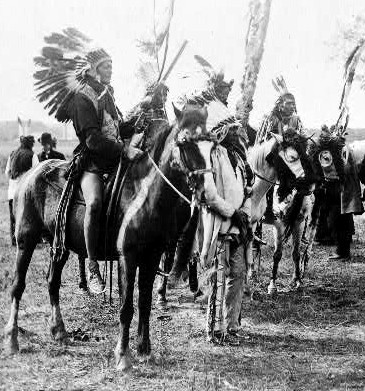
The night before we crossed the Platt one of Brigham's horses jumped into a hole and hung himself by his rope [ ] this morning our Ten consulted the matter over having two cooks and concluded it was best to follow Brigham's request [ ] I was elected head cook of nine men as follows [ ] Cap Norton Jacobs & C A Harper [ ] George Woodward who drives the cannon wagon [ ] Lewis P Barney & S Markham [ ] Andrew S Gibbons & George Mills [ ] Joseph Hancock & John Norton

After breakfast we resumed our journey and traveled about ten miles and stopped at noon to bait our teams [ ] we have had no rain and the earth is parched and dry and there is scarcely any grass to feed our teams [ ] we then traveled on till about an hour before sundown when we arrived at Gravel Creek where we camped and our horses were turned out to graze [ ] about dusk two of our horses where seen going off at full speed [ ] some on horse back put off after them but were unable to overtake them [ ] we came to the conclusion that the Indians were on them"
**********
"The stolen horses belonged to Willard Richards and Jesse C. Little. The hunting party encountered a number of Indians who tried to decoy them into their power. The brethern had considerable anxiety while passing through the Pawnee tribes." ....excerpt taken from Church History by Joseph Fielding Smith
Thomas Bullock journal:
"Monday 26 [ ] The Camp was awoke this morning at ½ past 3 by the blowing of the Horn & hearing from the Guard [ ] the alarm being made that Indians were near us which turned out to be that John Eldridge Levi Kendall & Stephen Kelsey of the Guard were the persons who saw them [ ] John Eldridge says he thought he saw a couple of Wolves coming to the Camp & determined to have some fun run as if to chase them when they rose up on their feet & turned out to be two Indians [ ] he pulled his pistol but it did not go off he then called to Kendall & Kelsey who fired their guns four other Indians having jumped up & run [ ] a general alarm being raised nearly all the men were found to be at their posts under their commanders of Tens who continued on Guard till Sunrise [ ] the Horn was again blown at 5 for all to get up herded the oxen until horn blew drove in fed & hitched up [ ] the camp were all started by ¼ past 8 [ ] the horse teams going first ox teams last making an entire new road on the South side of the Loup Fork [ ] travelled over a Prairie covered with dry grass & great many Prairie Daisies scattered about both black & white the face of the country is now beginning to change [ ] we had to cross many sloughs & small ridges [ ] the large trees disappear & instead thereof have small stunted scrubby trees & willows on the margin of the River [ ] Rolled at noon by one of the Sloughs where were 4 many Fishes [ ] in about an hour started again having a West Wind & Blue Sky a very pleasant day [ ] in the afternoon small White Clouds floating in the West [ ] on our left hand is a continuous ridge of high land about two miles distant on the other side of the River is a similar ridge [ ] John Y. Green's team tired out in the evening during the afternoon crossed 98 trails heading to the river [ ] some conjecture them to be Indian trails but when they some places 28, 18, 13 &c in a bunch [ ] I conjecture them to be Buffalo trails going to the River to drink at Capt Fremont (I believe) express such things very common on the Platte River [ ] we camped for the night on a clear stream of Water down in a ravine 17 miles in the neighborhood discovered Buffalo tracks hair & dung [ ] some horses straying away to far from Camp [ ] Prest Young called to the brethren to attend to their horses [ ] he has frequently called on the brethren "take care of your horses they are straying away," &c [ ] I herded Cattle & also assisted in driving in ten horses & mules [ ] about 8 oclock another alarm was given that an Indian was riding away a horse [ ] the brethren flew to arms & horses & several went in pursuit they having returned unsuccessful [ ] Prest. Young Kimball Lyman and Thomas Grover Joseph Matthews Luke Johnson John Brown & about half a dozen others mounted their horses and went in pursuit [ ] after travelling more distance they also returned unsuccessful at ½ past 10"
April 27, 1847

"the morning clear and cold [ ] four of the brethern started back on hunt of the lost horses and we resumed our journey by striking across towards the Platt [ ] the country we passed through was dry sandy and barren [ ] we halted about 10 oclock to refresh our teams [ ] some of the brethern shot an antelope and a hare during the day [ ] we then traveled on till we came to a beautiful stream of water where we camped for the night [ ] we had a slight shower of rain [ ] our brethern returned from the horse hunt without them [ ] said they saw 15 Indians who tried to rob them of their horses but they drawed their pistols and the Indians desisted but fired on them as our brethern retreated [ ] about sunset a rifle was accidentally discharged in a wagon and the ball struck the leg of a fine mare belonging to Lewis P Barney which broke the bone and rendered her entirely useless [ ] thus we have lost 4 horses within a few days by nothing but carelessness [ ] this day we traveled about 16 mile
**************

They are going through a place in Nebraska which is now called The Sand Hills. It is a very hard area for them especially when it came to the oxen as it was rough for them in trying to pull the wagons over this part of Nebraska. Water is also rare here so that is another problem. They try to dig and do find some moisture, but not enough for drinking. They have also run into some fear with some Pawnee Indians until they found out what they wanted most was tobacco. The pioneers didn't have any which didn't make the Pawnees happy. The pioneers had six shots fired at them upon in retaliation which, luckily, no one was injured. They deduced that these Indians had been following them for several days now, and are following them still. I love the aerial view here.
Subscribe to:
Comments (Atom)